
Burkitt Lymphoma
The Primary Central Nervous System Type

Six weeks post brain biopsy and we finally received confirmation of the sub-type for my husband’s Primary Central Nervous System Lymphoma (PCNSL). The doctors had assumed it was diffuse large B-cell (DLBC) as this makes up over 90% of all PCNSL cases and they had started treatment on that basis. However, that was not the case this time, my husband’s sub-type was in fact Burkitt and apparently the treatment for Burkitt is different to what my husband was being given.
We had never heard of Burkitt before and we didn’t know what that meant compared to DLBC or even PCNSL. The entire journey to date had already been a massive learning curve and it looked like that curve was about to grow again. You’re often hearing words you’ve never heard of before and important stats that are really just numbers to you in that moment, all of which require questions and further research to really gain a clear picture of what everything means, and how it relates to you and the situation you are currently dealing with.
What we did know was Lymphoma is the most common type of blood cancer in the UK and it affects the white blood cells called Lymphocytes12 . Broadly, there are two types of lymphoma depending on whether certain abnormal cells are seen, if they are it is classed as Hodgkin which makes up 10% of all lymphoma cases, but if those cells are absent, it is classed as non-Hodgkin, which makes up the other 90% and then there are many different types of lymphoma within those two groups3 .
PCNSL is a very rare type of non-Hodgkin lymphoma that has started in the central nervous system (including the brain, spinal cord and eyes) and is not found anywhere else in the body when you are diagnosed. PCNSL accounts for only 1-2% of all non-Hodgkin lymphoma cases45 and just over 6% of all tumours that start in the skull6 . It is considered high-grade, which means it is fast growing.
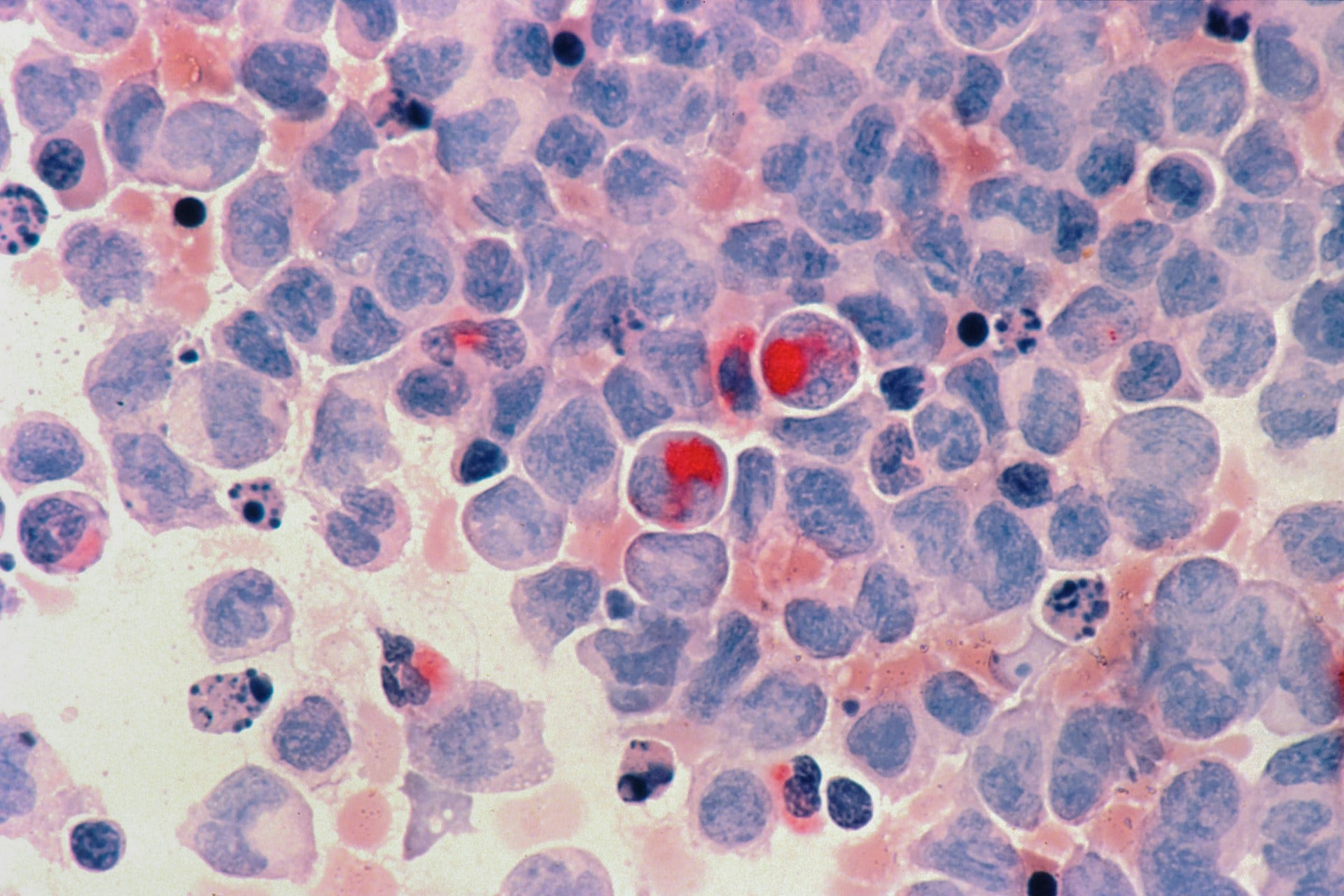
As we then discovered, Burkitt is an extremely rare and aggressive form of B-cell non-Hodgkin lymphoma and is considered the fastest growing human tumour, due to its ability to double in size within 24-48 hours78, it is usually systemic and can affect many different areas of the body.
The Burkitt sub-type of PCNSL is rarer still. According to research just 3-5% of PCNSL cases have the Burkitt sub-type910, which means I have struggled to find much information online or in research papers. Most charities only discuss PCNSL generally, or the systemic and sporadic form of Burkitt lymphoma, and in academic papers, so far, I have only discovered a few very specific case studies, general PCNSL or Burkitt studies, or papers detailing tumour presentation which mention Primary Central Nervous System Burkitt Lymphoma (PCNSBL) as it is known.
PCNSBL can affect all age groups and like PCNSL has a slightly higher rate in men and those who are immunocompromised, like my husband due to his Multiple Sclerosis (MS) treatment drug 4 9 1011.
A 2020 study stated that the exact number of PCNSBL cases were unknown, but at that point only 38 cases had been recorded in the literature 10. Obviously, what is recorded in the literature does not represent an accurate number of all cases and that lack of information was and is, honestly, frustrating for me.
Whilst I appreciate more energy will always be directed towards areas that affect the most people, there are still people behind these numbers who deserve more information and more clarity.
At the very least I would like to understand what are the UK statistics?
How many people in the UK have been diagnosed with PCNSBL?
What is the frequency of diagnosis?
What are the age categories?
What is the split between gender?
What is the split between immunocompetent and immunocompromised patients?
For immunocompromised:
What is their condition that requires their immune system to be suppressed?
What immunosuppressing drugs have they been on and for how long?
What treatment for PCNSBL did they receive and what were the cycle lengths?
What was the outcome of the treatment and over what timeframe?
If data isn’t tracked for rarer diseases how can increases in instances or trends be identified, all of which could help to improve prevention, treatment and patient outcomes.
Our consultant explained that our hospital treats around eight or nine people with PCNSL a year and only two or three with Burkitt lymphoma, but based on my research, my assumption now is they meant the systemic type of Burkitt lymphoma and not the PCNSL type, something I will of course be double checking.
The frontline treatment for PCNSL is the MATRix chemotherapy regimen, followed by a stem cell transplant12. However, our consultant said the treatment for Burkitt Lymphoma is different, it’s not MATRix and does not usually include a stem cell transplant13. They did, however, go on to say that there is no definitive framework to follow for Burkitt, it is all weighed up against different risk factors.
Whilst processing all this new information, we were also now aware of the results of my husband’s post chemotherapy cycle one MRI scan. That scan was arranged specifically to assess how his lymphoma had responded to the MATRix chemotherapy regimen. We were both anxious as to what the scan would show, you pray for good results obviously, but you also try to stay fairly level headed, in order to prepare yourself regardless.
When the consultant delivered the results, we could barely believe what we were hearing. The report stated a marked treatment response following cycle one, with near-complete resolution of the tumours in his brain. “Near-complete resolution”, I kept replaying those words in my head, I couldn’t believe it. It also confirmed he had definitely not suffered a stroke during his sepsis confusion episode. This was such fantastic news; I cannot begin to express the relief! We knew this wasn’t the end of the road and we were also now aware that Burkitt was aggressive and can start to re-grow between chemotherapy cycles, BUT it is also very sensitive to chemotherapy and clearly MATRix was having a positive effect so far. The consultant said “we couldn’t have hoped for anything better” after the first chemotherapy cycle.
However, this now opened up the question even further of what treatment path do they choose moving forward? Here is the dilemma they were working with.
My husband has PCNSL, but with the Burkitt sub-type.
The frontline treatment for PCNSL with the diffuse large B-cell sub-type is MATRix.
Burkitt lymphoma is usually systemic not PCNSL and is not treated with MATRix or typically a stem cell transplant.
The treatment regimen for Burkitt is designed to align with the aggressive and therefore rapid replication rate of Burkitt lymphoma.
My husband requires chemotherapy drugs that will cross the blood brain barrier (not all do).
The majority of chemotherapy drugs within the MATRix regimen do cross the blood brain barrier.
One of the key drugs within MATRix is Methotrexate, which has severely stressed and temporarily damaged my husband’s liver, under the guidelines they should not risk using it again.
My husband’s lymphoma has responded positively to MATRix and likely the Methotrexate.
We had already been told that with chemotherapy alone, the survival rate for PCNSL over five years was 30-40%, but with a stem cell transplant it raises to 70-80%, is that the same for the Burkitt sub-type? Particularly as they don’t usually do a stem cell transplant for systemic Burkitt lymphoma.
A concern was now running through my mind, my husband also has MS to add into the mix, which means he will always be on immunosuppressing drugs to manage it. If they follow the Burkitt treatment plan without a stem cell transplant, would that put him at a higher risk of the lymphoma returning if he successfully reaches remission? There is a good chance the reason he developed this lymphoma was because of this situation, so what stops it happening again?
I am aware they do stem cell transplants for people with MS in an attempt to halt its progression and if successful, there is a real possibility they will no longer require MS treatment drugs, at least for a period of time. Whilst the conditioning for a PCNSL stem cell transplant is different to an MS stem cell transplant, is there a chance it could help the MS too? Could it reset his dysregulated immune system and give him the chance of no longer requiring immunosuppressing drugs? Would that mean his risk of a lymphoma relapse, on that basis, would also be reduced?
I put my thoughts and concerns to the consultant and asked them specifically whether, due to the situation with his MS drugs, not having a stem cell transplant could put him at a higher risk of the lymphoma returning? The response was that it was a good question and yes, it possibly could.
So, do they risk changing the chemotherapy regimen or not? Do they move to the treatment for Burkitt or stay with what the MRI scan has shown is currently working and take a risk on permanently damaging my husband’s liver? What about the stem cell transplant?
We resigned ourselves to the fact that they are the experts. Whilst we obviously have lots of questions, the knowledge of my husband as a person and of his MS, we don’t have any medical knowledge and expertise around lymphoma and its treatment.
We have no choice but to trust them completely to come up with the best plan and hope that whatever is decided, will give him the best chance of beating this cancer and keeping it away.
Please note: Everything I write here is based on our own experience, the information we have been given, my own research and my understanding and interpretation of it. It is not medical advice and is not intended as guidance for anyone else in a similar situation. If you are going through something similar, please speak with your own medical team to ensure the information you receive is relevant and accurate to you and your situation.
Lymphoma Action. (2026). What is lymphoma? Lymphoma Action. https://lymphoma-action.org.uk/information-and-support/what-lymphoma
Macmillan Cancer Support. (2026). Lymphoma: diagnosis, treatment and support. https://www.macmillan.org.uk/cancer-information-and-support/lymphoma
Jamil, A., & Mukkamalla, SKR. (2023). Lymphoma. StatPearls [Internet]. https://www.ncbi.nlm.nih.gov/books/NBK560826/
Tang, D. et al (2022). Epidemiologic Characteristics, Prognostic Factors, and Treatment Outcomes in Primary Central Nervous System Lymphoma: A SEER-Based Study. Frontiers in Oncology, 12. https://doi.org/10.3389/fonc.2022.817043
Rare Disease Advisor. (2026). Primary Central Nervous System Lymphoma Epidemiology. https://www.rarediseaseadvisor.com/disease-info-pages/primary-central-nervous-system-lymphoma-epidemiology/
Xue, K. et al (2025). Primary central nervous system Burkitt lymphoma in a 38-year-old immunocompetent woman: A case report. Medicine (United States), 104(17). https://doi.org/10.1097/MD.0000000000042321
Molyneux, E. M. et al (2012). Burkitt’s lymphoma. The Lancet, 379(9822), 1234–1244. https://doi.org/https://doi.org/10.1016/S0140-6736(11)61177-X
CancerFax. (2026). Burkitt Lymphoma Rapid Diagnosis & intensive Treatment Access. https://cancerfax.com/conditions/burkitt-lymphoma
Bower, K., & Shah, N. (2018). Primary CNS Burkitt Lymphoma: A Case Report of a 55-Year-Old Cerebral Palsy Patient. Case Reports in Oncological Medicine, 2018, 1–7. https://doi.org/10.1155/2018/5869135
Lauw, M. I. S. et al (2020). Primary central nervous system lymphomas: A diagnostic overview of key histomorphologic, immunophenotypic, and genetic features. In Diagnostics (Vol. 10, Number 12). Multidisciplinary Digital Publishing Institute (MDPI). https://doi.org/10.3390/diagnostics10121076
Dr. Betsy Grunch. (2026). Case Study 223 | Primary CNS Lymphoma | Explained by Dr. Betsy Grunch - Available on YouTube
Pan, Z., Bao, J., & Wei, S. (2026). Translating advances in primary central nervous system lymphoma: from prognostic stratification to treatment innovation. Frontiers in Oncology, 16. https://doi.org/10.3389/fonc.2026.1591328
Broccoli, A. et al (2024). The Treatment of Burkitt Lymphoma With the Berlin-Frankfurt-Münster Protocol With Rituximab and Consolidative Autologous Transplantation. Oncologist, 29(6), e789–e795. https://doi.org/10.1093/oncolo/oyae017